KPV Peptide (Research Grade)
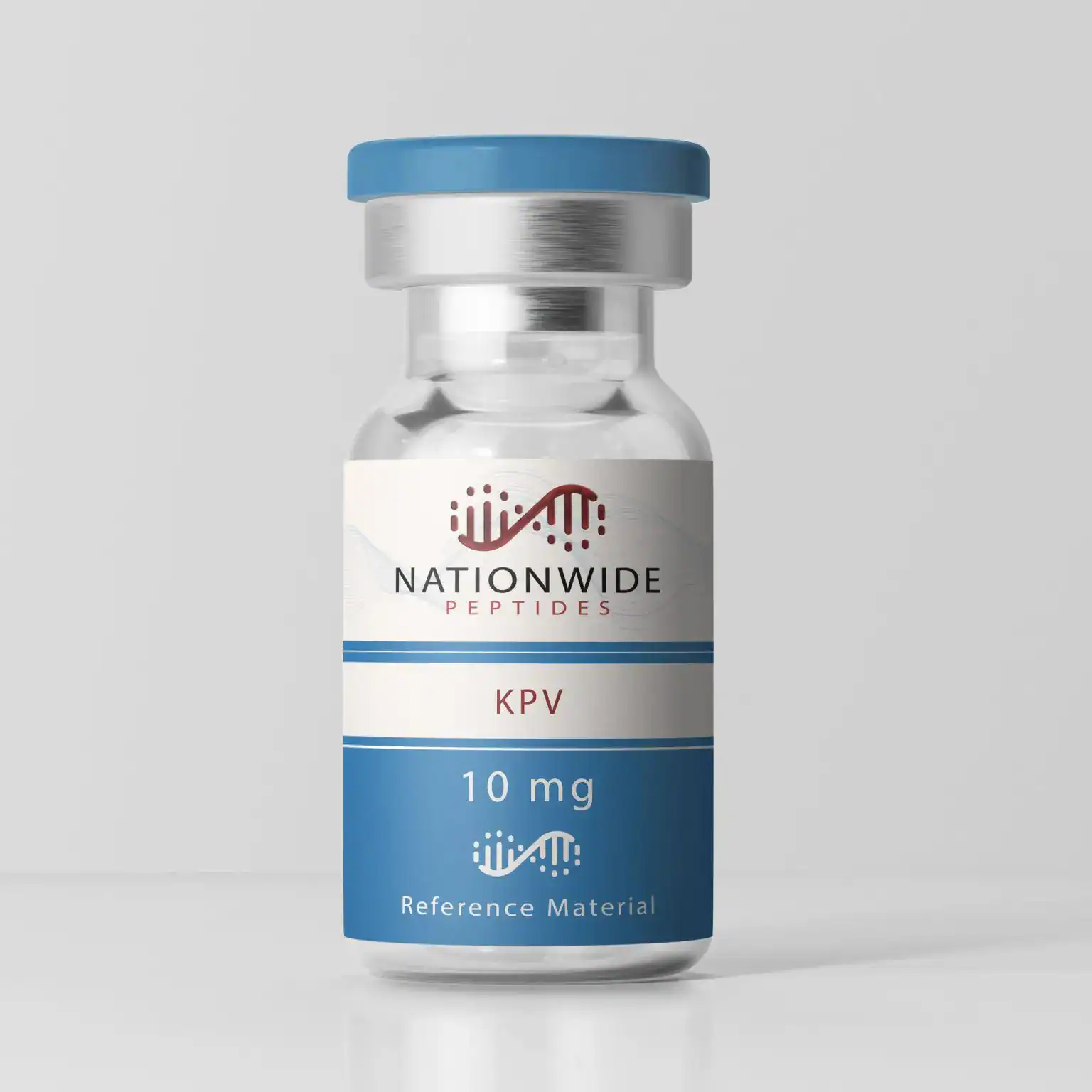
Laboratory-Grade KPV Peptide is a research-grade C-terminal tripeptide fragment of alpha-melanocyte stimulating hormone (α-MSH), consisting of the amino acid sequence Lys-Pro-Val (KPV). Researchers use KPV in preclinical inflammation, immune modulation, epithelial barrier, and melanocortin pathway studies to investigate biological mechanisms under controlled laboratory conditions.
KPV has gained significant attention in laboratory research due to its role in melanocortin-related signaling pathways. It is commonly selected for cell-based assays, mechanistic pathway research, cytokine studies, and gut barrier models, making it a valuable peptide for non-clinical scientific investigations.
For Research Use Only. Not for human or veterinary use. Not intended to diagnose, treat, cure, or prevent any disease.
KPV Peptide Research Overview
KPV is the C-terminal tripeptide fragment of alpha-MSH (α-Melanocyte Stimulating Hormone). Unlike the full α-MSH peptide, KPV contains only three amino acids—Lysine, Proline, and Valine—yet has been widely investigated for its potential role in inflammatory signaling pathways.
Research laboratories frequently select KPV for:
- Inflammatory pathway studies
- Cytokine signaling research
- Cell culture experiments
- Gut epithelial barrier models
- Melanocortin receptor investigations
- Assay development
- Method validation
- Preclinical mechanistic studies
Every laboratory should validate experimental conditions using its own SOPs, instrumentation, and assay systems.
Product Specifications
| Specification | Details |
|---|---|
| Product | KPV Peptide |
| Sequence | Lys-Pro-Val (KPV) |
| Peptide Type | Synthetic Tripeptide |
| Grade | Research Grade |
| Appearance | Lyophilized Powder |
| Purity | Third-Party Tested (COA Available) |
| Available Sizes | 5mg, 10mg |
| Storage | Store at -4°F or colder |
| Shipping | Secure protective packaging |
| Intended Use | Laboratory Research Only |
Research Applications
Researchers commonly purchase KPV Peptide for investigations involving:
- Cytokine regulation
- Inflammatory signaling
- Cell migration studies
- Barrier function assays
- Epithelial tissue models
- Immunological pathway research
- Mechanistic laboratory investigations
- Assay optimization
- Drug discovery screening
KPV is not approved for clinical, therapeutic, veterinary, or diagnostic applications.
KPV Peptide Benefits
Secondary Keyword: KPV peptide benefits
Within laboratory research, KPV has attracted scientific interest because of its involvement in several biological pathways under investigation.
Published preclinical studies have explored KPV in relation to:
- Melanocortin signaling pathways
- Inflammatory pathway modulation
- Cytokine expression research
- Intestinal epithelial barrier models
- Cell signaling mechanisms
- Immune pathway investigations
- Tissue repair models
- Oxidative stress research
These observations are limited to laboratory and preclinical studies and should not be interpreted as evidence of clinical effectiveness.
KPV Peptide Side Effects
Secondary Keyword: KPV peptide side effects
Since this product is not intended for human consumption, there are no established clinical safety profiles or approved side-effect data for KPV Peptide.
Researchers handling KPV should follow institutional laboratory safety procedures, including:
- Wearing appropriate PPE
- Following laboratory SOPs
- Proper storage procedures
- Safe reconstitution techniques
- Maintaining chain-of-custody documentation
KPV is supplied solely for laboratory investigation.
KPV Peptide Morning or Night
Secondary Keyword: KPV peptide morning or night
Because KPV Peptide is sold exclusively for research purposes, there is no medically established guidance regarding morning or nighttime use.
Experimental protocols vary depending on:
- Study objectives
- Cell type
- Incubation schedule
- Experimental endpoints
- Laboratory SOPs
Researchers should follow validated protocol designs rather than consumer dosing schedules.
KPV Peptide Cancer
Secondary Keyword: KPV peptide cancer
Researchers have explored melanocortin peptides, including KPV, in studies examining inflammatory pathways associated with various disease models. However:
- KPV is not approved as a cancer treatment.
- No regulatory agency has approved KPV for oncology.
- This product should never be represented as treating or preventing cancer.
Current research remains limited to laboratory investigations.
KPV Peptide Protocol
Secondary Keyword: KPV peptide protocol
Protocols involving KPV vary considerably depending on the experimental design.
Laboratory best practices include:
- Verify product identity before use
- Review Certificate of Analysis
- Record lot numbers
- Prepare buffers before reconstitution
- Follow validated SOPs
- Label aliquots clearly
- Avoid repeated freeze-thaw cycles
- Document assay conditions thoroughly
Pilot studies are often recommended before scaling to larger experimental panels.
KPV Peptide Dosage
Secondary Keyword: KPV peptide dosage
Because KPV Peptide is not approved for human or veterinary use, there is no established therapeutic dosage.
Researchers determine experimental concentrations based on:
- Published scientific literature
- Pilot experiments
- Cell models
- Detection systems
- Laboratory validation
Any concentration selected should be scientifically justified within the experimental protocol.
KPV Peptide Capsules
Secondary Keyword: KPV peptide capsules
This catalog listing is not supplied as capsules.
Instead, KPV is provided as:
- Research-grade lyophilized powder
- Laboratory-use vial
- Controlled research material
It is intended exclusively for laboratory reconstitution according to institutional procedures.
KPV Peptide Reviews
Secondary Keyword: KPV peptide reviews
Research organizations value KPV because of its:
- High research purity
- Consistent batch identification
- Third-party quality testing
- Certificate of Analysis availability
- Reliable documentation
- Suitability for mechanistic pathway research
Purchasing decisions should be based on research requirements, quality documentation, and laboratory compatibility rather than anecdotal consumer experiences.
Laboratory Handling
Receiving
Upon receipt:
- Verify product labeling
- Inspect packaging
- Compare lot numbers with documentation
- Retain shipping records
Reconstitution
Follow institutional SOPs for:
- Solvent compatibility
- Weighing
- Aliquot preparation
- Concentration calculations
- Storage validation
Prepare buffers before opening the vial to minimize exposure.
Storage
For optimal long-term stability:
- Keep peptides sealed in their original vial.
- Protect from moisture, humidity, and light.
- Store at -4°F (-20°C) or colder.
- Short-term refrigeration around 39°F (4°C) is suitable for use within several weeks.
- Avoid repeated freeze-thaw cycles whenever possible.
Quality Assurance
Every batch is supported by laboratory documentation where available, including:
- Third-party analytical testing
- Certificate of Analysis (COA)
- Batch identification
- Purity verification
- Research-grade quality standards
Maintain documentation with laboratory records throughout the study lifecycle.
Frequently Asked Questions
What does KPV peptide do to your body?
KPV has been investigated in laboratory studies for its potential involvement in inflammatory signaling, immune-related pathways, and epithelial barrier research. However, this product is not approved for human use, and its effects in people have not been established.
How long should you take KPV peptide?
There is no approved duration of use because KPV is not intended for human consumption. Research protocols vary according to the objectives of each laboratory study.
What is another name for the KPV peptide?
KPV is also known as the Lys-Pro-Val peptide, reflecting its amino acid sequence. It is the C-terminal tripeptide fragment of alpha-melanocyte stimulating hormone (α-MSH).
What is the best KPV peptide?
For laboratory applications, researchers typically look for:
- Research-grade purity
- Third-party testing
- Certificate of Analysis (COA)
- Batch consistency
- Reliable documentation
- Secure packaging
Selecting a peptide with verified quality documentation helps improve reproducibility in preclinical research.
What is KPV peptide?
KPV is a synthetic tripeptide composed of Lysine, Proline, and Valine. It is derived from α-MSH and is commonly investigated in laboratory research involving inflammatory and immune-related pathways.
What is KPV used for in research?
KPV is commonly studied in:
- Cytokine signaling
- Inflammatory pathway research
- Gut barrier models
- Cell culture experiments
- Mechanistic biological studies
- Melanocortin pathway investigations
Is KPV FDA approved?
No. KPV has not been approved by the U.S. Food and Drug Administration for any medical, therapeutic, or diagnostic application.
Is KPV intended for human use?
No. KPV is sold strictly for laboratory research and is not intended for human or animal use.
How is KPV supplied?
KPV is supplied as a lyophilized (freeze-dried) peptide powder for laboratory research.
What vial sizes are available?
Available options include:
- 5 mg
- 10 mg
How should KPV be stored?
For maximum stability:
- Store sealed at -4°F (-20°C) or colder.
- Protect from moisture, humidity, and light.
- Refrigeration around 39°F (4°C) is suitable for short-term storage.
- Minimize freeze-thaw cycles.
Why Researchers Choose KPV Peptide
Laboratories frequently source KPV because it offers:
- Research-grade quality
- Characterized peptide identity
- Consistent batch documentation
- COA availability
- Compatibility with assay development
- Support for mechanistic and inflammation-related research
- Reliable procurement for multi-site studies
Disclaimer
For Research Use Only. Not for human use. Not for veterinary use.
This product is intended exclusively for laboratory research performed by qualified professionals. It is not intended to diagnose, treat, cure, or prevent any disease and has not been evaluated or approved by the U.S. Food and Drug Administration (FDA) for any therapeutic or clinical application.