Dihexa Peptide (10mg) – Research Grade
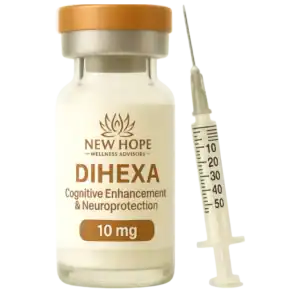
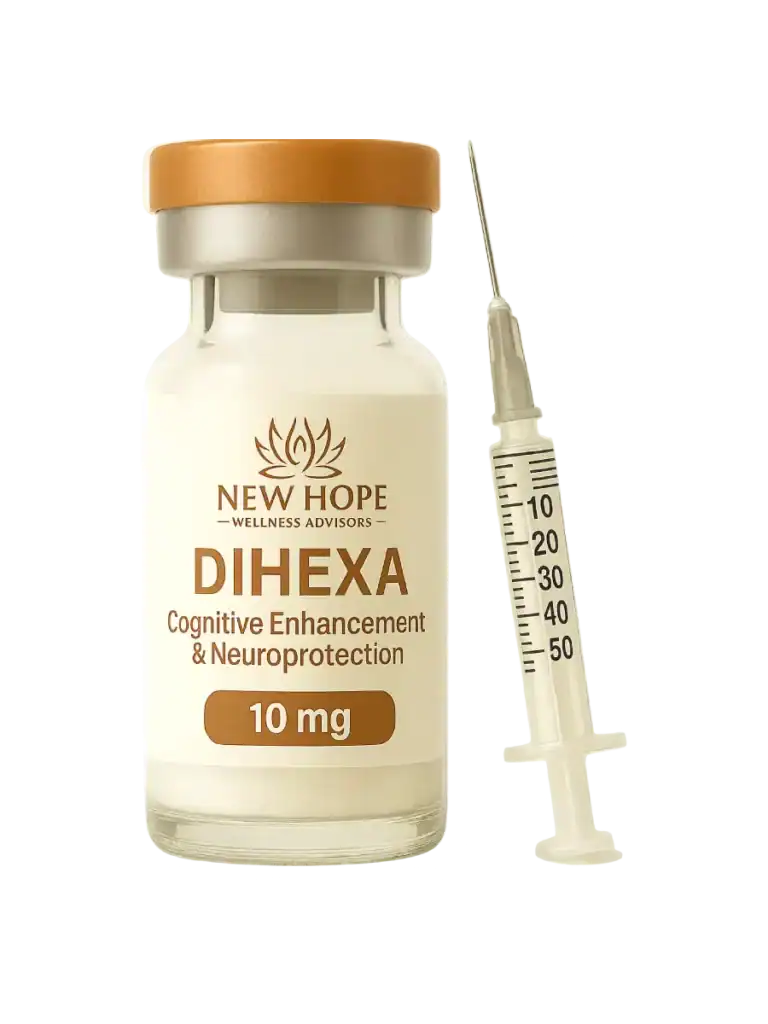
Dihexa Peptide (10mg) is a research-grade synthetic oligopeptide derived from Angiotensin IV and developed for laboratory investigations involving hepatocyte growth factor (HGF) signaling, c-Met receptor biology, synaptic plasticity, and neuroscience research. Also known as PNB-0408 or N-hexanoic-Tyr-Ile-(6-aminohexanoic amide), Dihexa has attracted significant scientific interest for its exceptionally high affinity for HGF and its role in preclinical neurobiology studies.
Researchers utilize Dihexa in cell culture experiments, mechanistic neuroscience studies, receptor-signaling investigations, cognitive-model systems, and drug discovery research. This research peptide is supplied as a 10 mg lyophilized powder manufactured exclusively for laboratory use.
For Research Use Only. Not for human use.
For Research Use Only. Not for human use.
Dihexa Peptide Research Overview
Dihexa is an investigational peptide derived from Angiotensin IV and designed to interact with the hepatocyte growth factor (HGF)/c-Met signaling pathway, a pathway involved in cellular communication, neuronal development, and tissue remodeling.
Because of its unique biological profile, Dihexa is commonly investigated in laboratory research involving:
- Neurotrophic signaling
- HGF/c-Met receptor biology
- Synaptic plasticity
- Cognitive-model systems
- Neuronal communication
- Cell signaling pathways
- Drug discovery
- Mechanistic neuroscience
- In vitro pharmacology
- Preclinical neurobiology
Research involving Dihexa should always remain within validated institutional laboratory protocols.
Product Specifications
| Specification | Details |
|---|---|
| Product | Dihexa Peptide |
| Strength | 10 mg |
| Chemical Name | Dihexa |
| Development Code | PNB-0408 |
| CAS Number | 1401708-83-5 |
| Molecular Formula | C27H44N4O5 |
| Molecular Weight | 504.7 g/mol |
| Sequence | Hexanoyl-Tyr-Ile-Ahx-NH₂ |
| Appearance | White to Off-White Lyophilized Powder |
| Purity | ≥98.1% (HPLC) |
| Identity | Confirmed by Mass Spectrometry |
| Storage | -20°C |
| Intended Use | Research Use Only |
Research Applications
Dihexa Peptide is commonly selected for research involving:
- Neuroscience
- Synaptic signaling
- HGF receptor biology
- c-Met signaling
- Cognitive pathway research
- Mechanistic pharmacology
- Cell culture studies
- Drug discovery
- Neurodegeneration models
- Assay development
Dihexa is not approved for therapeutic, diagnostic, veterinary, or clinical applications.
Dihexa Peptide 10mg Benefits
Secondary Keyword: Dihexa peptide 10mg benefits
Within laboratory research, Dihexa has generated scientific interest because of its interaction with HGF-mediated signaling pathways.
Published preclinical investigations have explored Dihexa in relation to:
- Synaptic plasticity research
- Neuronal signaling
- HGF receptor activation
- c-Met pathway biology
- Mechanistic neuroscience
- Cognitive-model investigations
- Neurobiology research
- Drug discovery programs
These observations are derived from laboratory studies and should not be interpreted as evidence of clinical efficacy or therapeutic benefit.
Dihexa Peptide 10mg Price
Secondary Keyword: Dihexa peptide 10mg price
Pricing for Dihexa Peptide (10 mg) reflects several quality factors, including:
- Research-grade manufacturing
- Batch purity
- Mass spectrometry identity confirmation
- HPLC testing
- Certificate of Analysis (COA)
- Inventory availability
Refer to the product page for current pricing.
Dihexa Peptide Review
Secondary Keyword: Dihexa peptide 10mg review
Researchers selecting Dihexa generally prioritize:
- High peptide purity
- Verified molecular identity
- Batch-to-batch consistency
- Research documentation
- Reliable manufacturing standards
- Certificate of Analysis availability
Quality documentation is essential for reproducibility across laboratory studies.
Dihexa Peptide Buy
Secondary Keyword: Dihexa peptide buy
When purchasing Dihexa for research purposes, laboratories often evaluate:
- HPLC purity results
- Mass spectrometry confirmation
- COA documentation
- Batch traceability
- Research-grade manufacturing
- Secure packaging
- Reliable inventory
Every vial is intended solely for scientific investigation.
Dihexa Peptide Dosage Per Day
Secondary Keyword: Dihexa peptide dosage per day
Because Dihexa is not approved for human or veterinary use, there is no established daily dosage.
Experimental concentrations are determined according to:
- Published research
- Cell type
- Experimental objectives
- Laboratory methodology
- Institutional SOPs
- Assay validation
Researchers should independently establish appropriate experimental conditions.
Dihexa Peptide Oral vs Injection
Secondary Keyword: Dihexa peptide oral vs injection
Online discussions sometimes compare oral and injectable forms of Dihexa. However, this catalog listing is supplied only as a research-grade lyophilized peptide for laboratory investigation.
It is not formulated or approved for oral or injectable administration, and any experimental delivery methods should remain within validated research protocols.
Dihexa Peptide Injection Dosage
Secondary Keyword: Dihexa peptide injection dosage
There is no approved injection dosage for Dihexa because it is not intended for human administration.
Researchers determine experimental concentrations according to validated laboratory study designs rather than clinical dosing recommendations.
Dihexa Peptide Protocol
Secondary Keyword: Dihexa peptide protocol
Laboratory workflows involving Dihexa typically include:
- Product identity verification
- Review of Certificate of Analysis
- Recording batch information
- Preparation of compatible solvents
- Reconstitution according to institutional SOPs
- Aliquot preparation
- Storage validation
- Experimental documentation
Pilot studies are recommended before larger screening programs.
Solubility Information
Dihexa exhibits hydrophobic properties, making solvent selection an important consideration during laboratory preparation.
Laboratory observations indicate:
- Dihexa does not readily dissolve in pure water.
- DMSO is commonly used as a suitable research solvent.
- Dihexa dissolves effectively in DMSO at approximately 1 mg/mL.
- Addition of water may produce temporary cloudiness.
- Brief ultrasonic treatment may improve solution clarity during laboratory preparation.
Researchers should validate solvent compatibility according to their own laboratory procedures.
Storage Guidelines
To maintain peptide integrity:
- Store lyophilized Dihexa at −20°C.
- Keep the vial sealed and protected from moisture and light.
- Once reconstituted, use promptly or store at 2–8°C for short-term laboratory use.
- Avoid repeated freeze–thaw cycles.
Certificate of Analysis (COA)
Each production batch includes or is supported by a Certificate of Analysis (COA) confirming product quality. The supplied batch documentation reports:
- ≥10.0 mg peptide content per vial
- ≥98.1% purity by HPLC
- Identity confirmed by Mass Spectrometry
- White to off-white lyophilized powder appearance
- Batch-specific analytical documentation
These specifications support traceability and reproducibility in laboratory research.
Why Researchers Choose Dihexa
Research laboratories frequently select Dihexa because it offers:
- Research-grade manufacturing
- High HPLC purity
- Mass spectrometry identity confirmation
- Batch-specific COAs
- Reliable documentation
- Compatibility with neuroscience research
- Support for HGF/c-Met pathway investigations
- Consistent laboratory quality standards
Frequently Asked Questions
What is Dihexa Peptide?
Dihexa is a synthetic oligopeptide derived from Angiotensin IV that binds with high affinity to hepatocyte growth factor (HGF) and is widely investigated in neuroscience and receptor-signaling research.
What are the benefits of Dihexa Peptide?
In laboratory studies, Dihexa has been investigated for its potential role in HGF/c-Met signaling, synaptic plasticity, neuronal communication, and cognitive-model research. These findings are limited to preclinical studies and do not establish clinical benefit.
What is Dihexa used for in research?
Researchers commonly study Dihexa in:
- Neuroscience
- HGF signaling
- c-Met receptor biology
- Synaptic plasticity
- Cell signaling
- Drug discovery
- Mechanistic pharmacology
- In vitro neurobiology
Is Dihexa FDA approved?
No. Dihexa has not been approved by the U.S. Food and Drug Administration (FDA) for any therapeutic, diagnostic, or medical use.
Is Dihexa intended for human use?
No. Dihexa Peptide is supplied strictly for research use only and is not intended for human or veterinary use.
Why is DMSO recommended for Dihexa?
Due to its hydrophobic nature, Dihexa does not readily dissolve in water. Laboratory protocols commonly use DMSO as a compatible solvent for reconstitution, with subsequent validation according to institutional procedures.
How should Dihexa be stored?
For optimal stability:
- Store lyophilized peptide at −20°C.
- Protect from light and moisture.
- Store reconstituted solutions at 2–8°C for short-term laboratory use.
- Avoid repeated freeze–thaw cycles.
Research Use Disclaimer
For Research Use Only. Not for human use.
Dihexa Peptide (10 mg) is supplied exclusively as a research-grade laboratory compound for qualified scientific investigation. It is not intended for human or veterinary use and must not be used to diagnose, treat, cure, or prevent any disease. Product identity and purity are verified through batch-specific analytical testing, including HPLC and mass spectrometry, with supporting documentation available in the Certificate of Analysis.