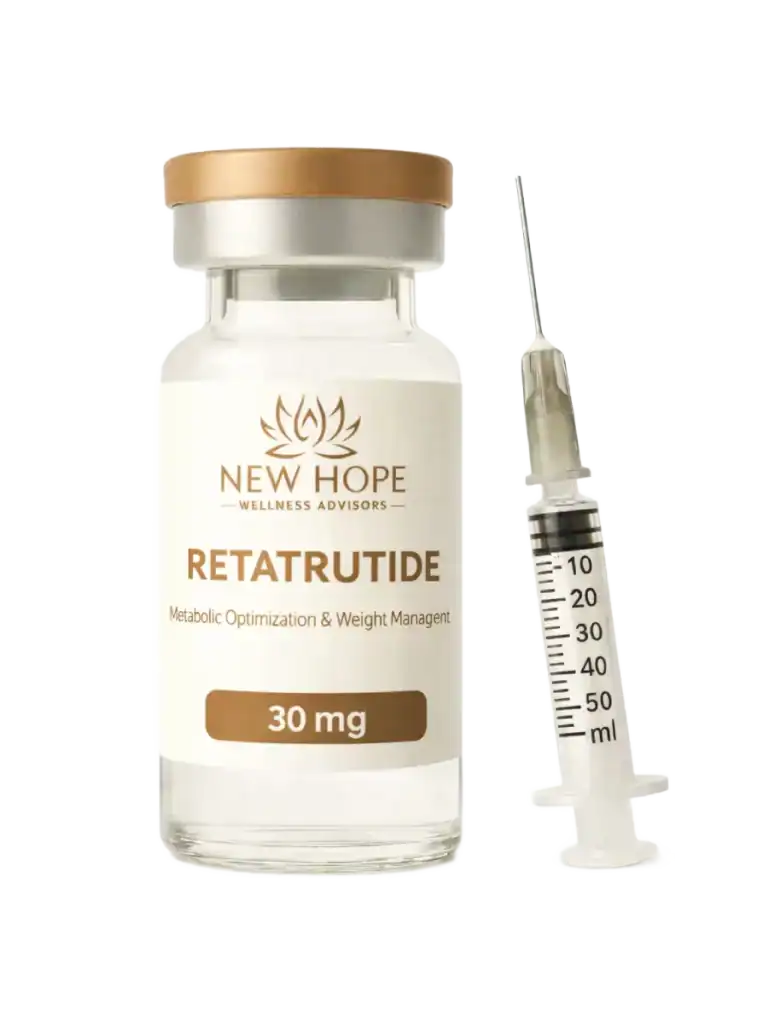
Retatrutide Peptide (30mg)
Retatrutide Peptide (30mg) is a research-grade synthetic triple receptor agonist peptide developed for laboratory investigation of GLP-1 (glucagon-like peptide-1), GIP (glucose-dependent insulinotropic polypeptide), and glucagon receptor signaling pathways. Researchers utilize Retatrutide in preclinical and translational studies exploring metabolic regulation, energy balance, glucose homeostasis, obesity mechanisms, and endocrine biology.
Its triple-agonist mechanism has made Retatrutide one of the most extensively investigated metabolic research peptides in modern pharmaceutical research. This product is supplied as a 30 mg lyophilized peptide manufactured exclusively for laboratory investigation and is not intended for clinical, veterinary, or consumer use.
For Research Use Only. Not for human use.
For Research Use Only. Not for human use.
Retatrutide Peptide Research Overview
Retatrutide is an investigational peptide designed to activate three metabolic receptors simultaneously:
- GLP-1 receptor
- GIP receptor
- Glucagon receptor
This triple agonist profile distinguishes Retatrutide from dual agonist peptides and has generated significant scientific interest in metabolic and endocrine research.
Current laboratory investigations commonly focus on:
- Metabolic pathway research
- Endocrine signaling
- Energy expenditure models
- Appetite regulation biology
- Glucose metabolism
- Obesity research
- Drug discovery
- Cell signaling
- Hormone receptor biology
- Mechanistic pharmacology
Research involving Retatrutide should be conducted only under validated institutional laboratory protocols.
Product Specifications
| Specification | Details |
|---|---|
| Product | Retatrutide Peptide |
| Strength | 30 mg |
| Appearance | White Lyophilized Powder |
| Grade | Research Grade |
| Purity | Third-Party Tested |
| Intended Use | Laboratory Research Only |
| Form | Lyophilized Peptide |
| Storage | Frozen, Protected from Moisture and Light |
Research Applications
Retatrutide Peptide is widely investigated for laboratory studies involving:
- GLP-1 receptor biology
- GIP receptor signaling
- Glucagon receptor activation
- Metabolic regulation
- Energy homeostasis
- Endocrine physiology
- Appetite regulation mechanisms
- Cell-based assays
- Drug discovery
- Mechanistic research
This product is not approved for therapeutic, diagnostic, veterinary, or clinical applications.
Retatrutide Peptide Benefits
Secondary Keyword: Retatrutide peptide benefits
Within scientific research, Retatrutide has attracted attention because of its triple receptor agonist mechanism.
Published research has investigated Retatrutide in relation to:
- GLP-1 signaling pathways
- GIP receptor biology
- Glucagon receptor activation
- Energy balance
- Metabolic regulation
- Glucose homeostasis
- Obesity research
- Endocrine pathway investigation
These findings are limited to laboratory and clinical research settings and should not be interpreted as established therapeutic benefits.
Retatrutide Peptide vs Tirzepatide
Secondary Keyword: Retatrutide peptide vs tirzepatide
Retatrutide and Tirzepatide are both investigational peptides studied for metabolic regulation, but they differ in receptor activity.
| Retatrutide | Tirzepatide |
|---|---|
| Triple agonist | Dual agonist |
| Targets GLP-1, GIP & Glucagon receptors | Targets GLP-1 & GIP receptors |
| Investigated for broader metabolic pathway activation | Investigated primarily for dual incretin signaling |
| Currently investigational | Approved in some countries for specific medical indications (formulations differ from research-grade products) |
This research-grade Retatrutide product is intended solely for laboratory investigation and should not be confused with approved prescription medicines.
Retatrutide Peptide Side Effects
Secondary Keyword: Retatrutide peptide side effects
Because this product is supplied exclusively for laboratory research, there is no approved safety profile for this research-grade material.
Published clinical investigations of pharmaceutical Retatrutide have reported gastrointestinal adverse events such as:
- Nausea
- Vomiting
- Diarrhea
- Constipation
- Reduced appetite
These observations relate to clinical research of investigational pharmaceutical formulations and do not establish the safety or appropriate use of this research-grade product.
Retatrutide Peptide Cost
Secondary Keyword: Retatrutide peptide cost
Research-grade Retatrutide pricing varies depending on:
- Peptide purity
- Independent analytical testing
- Batch consistency
- Manufacturing standards
- Certificate of Analysis (COA)
- Inventory availability
Current pricing is available on the product page.
Retatrutide Peptide 20 mg
Secondary Keyword: Retatrutide peptide 20 mg
Retatrutide is available from research suppliers in different vial sizes, including 20 mg and 30 mg formats.
Selection depends on:
- Laboratory study size
- Experimental design
- Inventory planning
- Institutional purchasing requirements
Vial size does not imply an approved dose or treatment regimen.
Retatrutide Peptide Reddit
Secondary Keyword: Retatrutide peptide Reddit
Retatrutide is frequently discussed on online forums and social platforms. However, anecdotal reports should not be considered scientific evidence.
Researchers should rely on:
- Peer-reviewed publications
- Institutional protocols
- Published clinical trial data
- Laboratory validation
- Certificates of Analysis
rather than user-generated online experiences.
Retatrutide Peptide Dosing
Secondary Keyword: Retatrutide peptide dosing
Because Retatrutide is not approved for human or veterinary use, there is no established dosing recommendation for this research-grade product.
Experimental concentrations are determined by:
- Study objectives
- Laboratory methodology
- Published research
- Institutional SOPs
- Assay validation
Each research laboratory should establish and validate its own experimental conditions.
Retatrutide Peptide Dosage Chart
Secondary Keyword: Retatrutide peptide dosage chart
There is no approved dosage chart for research-grade Retatrutide.
Laboratory investigations use concentrations and protocols appropriate to their experimental models, and these should not be interpreted as recommendations for human or veterinary administration.
Laboratory Handling
Researchers should:
- Verify lot numbers upon receipt.
- Review Certificates of Analysis before experimentation.
- Follow institutional SOPs for reconstitution and aliquoting.
- Minimize freeze-thaw cycles.
- Document all experimental conditions.
- Maintain chain-of-custody records.
Storage Guidelines
For optimal stability:
- Store lyophilized peptide frozen.
- Protect from moisture and direct light.
- Store according to validated laboratory procedures.
- Clearly label aliquots after reconstitution.
- Avoid repeated freeze-thaw cycles.
Quality Assurance
Every production batch is supported by quality documentation, including:
- Third-party purity testing
- Identity verification
- Batch traceability
- Certificate of Analysis (COA)
- Research-grade manufacturing standards
These quality measures help ensure reproducibility across laboratory studies.
Why Researchers Choose Retatrutide
Research laboratories frequently select Retatrutide because it offers:
- Research-grade manufacturing
- Triple receptor agonist profile
- Batch traceability
- COA documentation
- Third-party analytical testing
- Reliable product consistency
- Support for metabolic and endocrine research
- Compatibility with mechanistic pathway investigations
Frequently Asked Questions
What is Retatrutide peptide?
Retatrutide is a synthetic investigational peptide that acts as a triple agonist of the GLP-1, GIP, and glucagon receptors. It is widely studied in metabolic and endocrine research.
What are the benefits of Retatrutide peptide?
In laboratory and clinical research, Retatrutide has been investigated for its effects on metabolic signaling, glucose regulation, appetite-related pathways, and energy homeostasis. These findings should not be interpreted as established clinical benefits.
What are the bad side effects of Retatrutide?
Clinical studies of investigational Retatrutide formulations have reported gastrointestinal adverse events, including nausea, vomiting, diarrhea, constipation, and reduced appetite. This research-grade product is not approved for human use, and no approved safety profile exists for laboratory formulations.
What does Retatrutide do to the body?
In research settings, Retatrutide activates GLP-1, GIP, and glucagon receptors, allowing scientists to study metabolic regulation, hormone signaling, and energy balance. It is not approved for therapeutic use.
Is Retatrutide available in the UAE?
Availability varies depending on local regulations and whether the product is offered as a research reagent or through authorized clinical research channels. Researchers should verify applicable import requirements and institutional policies before purchasing.
How should Retatrutide be stored?
For laboratory use, store the lyophilized peptide frozen, protected from moisture and light, following validated institutional storage procedures. Avoid repeated freeze-thaw cycles.
Is Retatrutide FDA approved?
No. Research-grade Retatrutide is not approved by the U.S. Food and Drug Administration (FDA) for therapeutic or clinical use.
Is Retatrutide intended for human use?
No. This product is supplied strictly for research purposes only and is not intended for human or veterinary use.
Research Use Disclaimer
For Research Use Only. Not for human use.
Retatrutide Peptide (30 mg) is supplied exclusively as a research-grade laboratory compound for qualified scientific investigation. It is not intended for human or veterinary use and must not be used to diagnose, treat, cure, or prevent any disease. This product has not been evaluated or approved by the U.S. Food and Drug Administration (FDA) for therapeutic or clinical applications. All handling, storage, and experimental use should follow validated institutional laboratory procedures.